Que Club: the rave that took over a Methodist church for nearly three decades
A Gothic Revival church hall built in 1904, still Grade II-listed, and the rave promoters who filled it for the best part of thirty years.
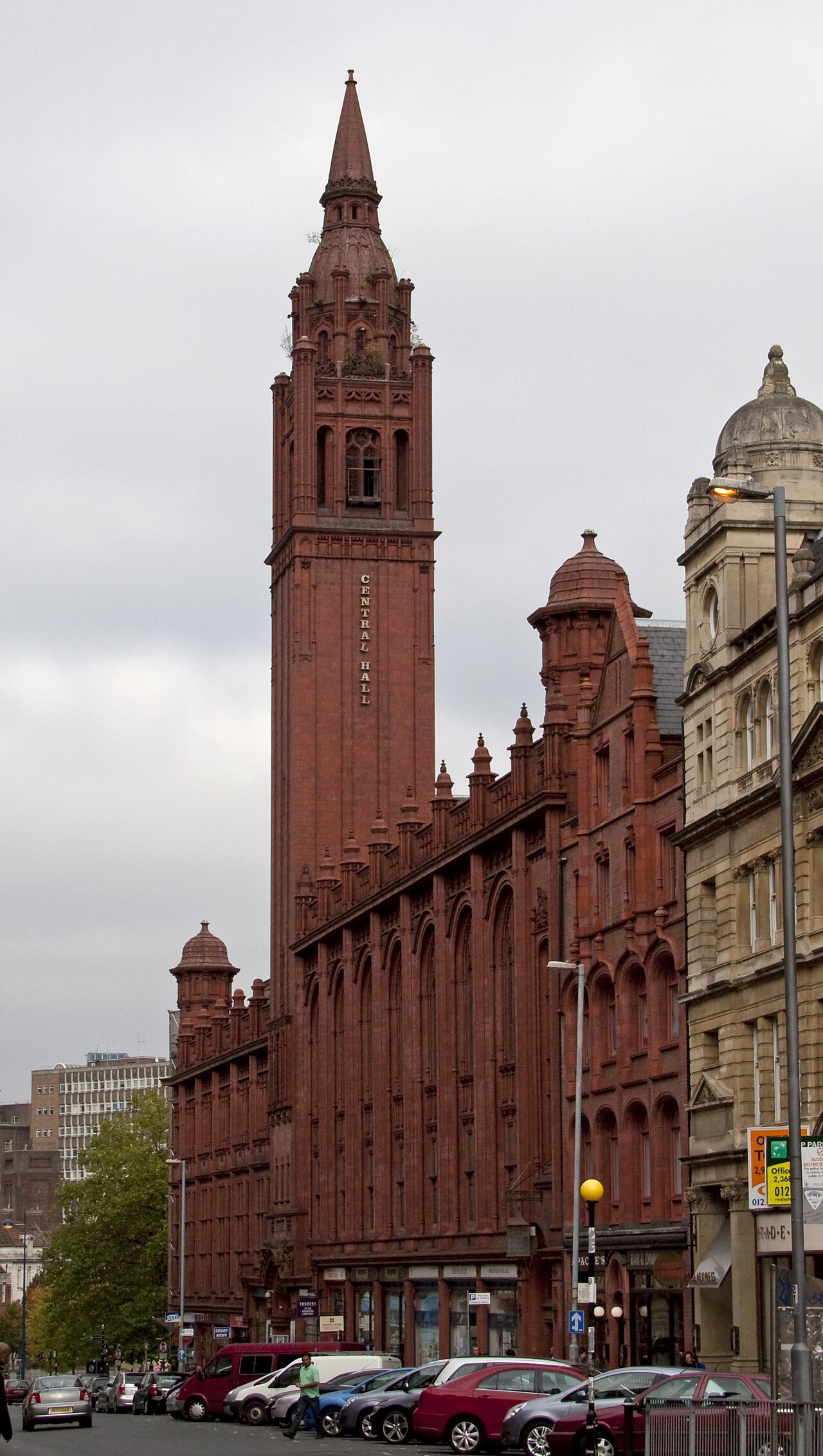
A church hall, not a club
The building opened as Methodist Central Hall in 1904, designed by Ewan Harper and James A. Harper in Gothic Revival style, in red brick and terracotta - a genuine church hall rather than anything built for nightlife. Rod Stewart's former manager, Billy Gaff, bought it in 1989 and opened it as Que Club, and from the start it operated as a queer-inclusive space during a period when Birmingham's LGBTQ+ scene was expanding into exactly this kind of room.
Atomic Jam, and what played there
Atomic Jam, a techno night still known specifically for its multi-room format - techno in the main room, drum & bass and dubstep, breakbeat and electro split across the others - launched its first event at Que Club in August 1995, headlined by Richie Hawtin, and ran there monthly for the rest of the decade and into the 2000s.
The venue became a genuine centre for Birmingham's alternative and rave culture more broadly, hosting DJs and acts across house, techno and beyond over its run.
Closure, and what happens to a listed building
Que Club closed in 2017. Because the building is Grade II-listed, closing it did not simply free the site for redevelopment the way an ordinary warehouse or a coal yard might be repurposed - the Methodist Central Hall has instead ended up on the Heritage at Risk Register, its future genuinely unresolved rather than settled into flats or a shopping street the way several other venues in this section were.
In 2022, Birmingham Museum & Art Gallery held a retrospective exhibition on the venue's history, In The Que, supported by the National Lottery Heritage Fund - a museum treating a rave venue's history the same way it would treat any other piece of the city's cultural record.