The Scene
Where have all the clubs gone?
From the Haçienda to fabric, from fields in Wiltshire to a Tuesday night in a basement. The rise, the fall and the stubborn comeback of the British club.
By On The Door team · · 5 min read
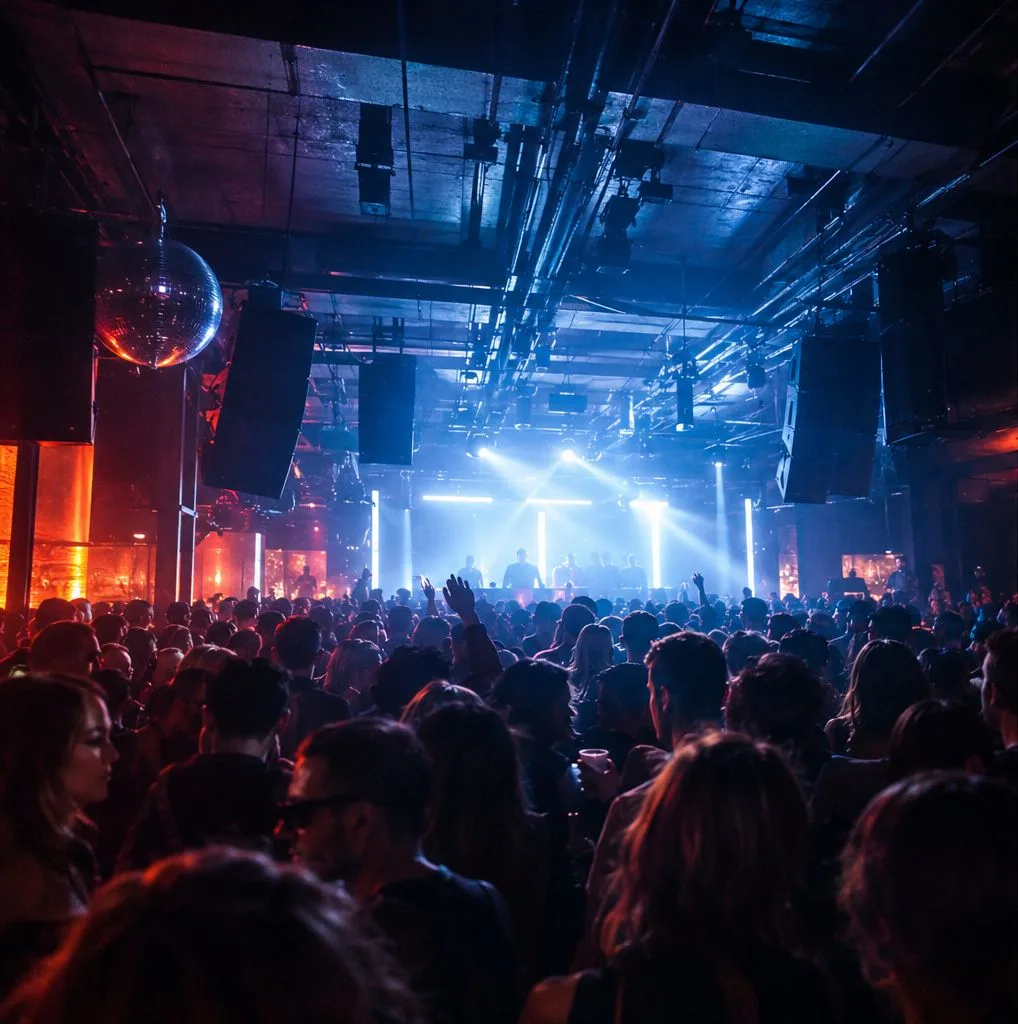
Ask anyone who has been going out for twenty years where they used to go, and watch their face. There is a pause, then a name, then a "that's flats now". Every town has one. A club that mattered, that people crossed the country for, that you can still describe down to the smell of the smoke machine. It is now a gym, a block of apartments or a hole in the ground with a fence round it.
So where have all the clubs gone? The honest answer is that it was never one thing. It was lots of small things stacked on top of each other until the floor gave way. Here is the story as I see it.
It started in a warehouse, not a venue
British club culture was not planned. It was a pile of kids, a pile of records and a few people brave enough to hire a room. The Haçienda opened in Manchester in 1982 and spent years nearly empty before the late eighties turned it into the most famous dance floor in the country. Then came the warehouse parties and the fields, and with them the first panic. In 1992 a free festival at Castlemorton Common drew tens of thousands of people over a week, and Parliament decided that what it had on its hands was a problem to be solved. The Criminal Justice and Public Order Act arrived in 1994, with its famous line about music "wholly or predominantly characterised by the emission of a succession of repetitive beats". Dance music was being written into law as a threat.
It did not stop anything. It just pushed it indoors, and indoors had a business model.
The superclub years
If you went out in the nineties you saw the next bit happen. Cream in Liverpool, Ministry of Sound in London, Gatecrasher in Sheffield, Godskitchen, Renaissance. These were not just clubs, they were brands. They had their own compilations, their own clothing, their own tours, and for a while a booking at one of them was the biggest night of a DJ's life. Money poured in. Resident DJs became household names and a Saturday night became a product you could package, sell and export.
That was brilliant for a while. It also meant that the whole scene was suddenly sitting on big rents, big wages and big expectations. A superclub does not get to have a quiet month.
The long slow squeeze
Then the squeeze started, and it was not dramatic. No single night killed anything. The Haçienda had shut in 1997, ground down by crime and money trouble, and the building that held so much history became apartments. Turnmills in London went in 2008. The End followed in 2009. Cream played its final night at Nation in Liverpool on Boxing Day 2015, after more than twenty years in the building.
Behind the famous names there were thousands of ordinary rooms disappearing quietly. Figures reported in 2015 put the number of UK nightclubs at 1,733, down from 3,144 in 2005. That is almost half gone in ten years. The people running the trade blamed a mix of heavy regulation, business rates, licensing pressure and new flats going up next to old venues, where the first complaint about noise could be enough to put a licence under review. Pubs got later licences, supermarkets sold cheap drink, and the pre drinks got better than the club.
Then fabric, and everyone woke up
In September 2016 Islington council revoked fabric's licence after two people died, and the club was announced as closed for good. That was the moment people outside the scene started to ask what was going on. The one thing that most London clubbers would have named as the heart of the capital's night time was gone overnight. It reopened in November that year after a campaign, a deal on conditions and a lot of people shouting loudly, but it left a mark. We learned how fragile the whole thing was.
Then the lights went off
In March 2020 every club in the country shut. They stayed shut for more than a year. Clubs did not reopen in England until 19 July 2021, and the long gap took out venues that had been hanging on by their fingernails. Many reopened into a different world: higher energy bills, higher wages, higher rent and customers who had got used to going out earlier and spending less.
What is actually different now
The superclub is mostly a memory. In its place there is something that, honestly, looks a lot more like the start of the story. Small rooms. Promoters who know their crowd by name. One night a month in a basement that holds three hundred people and sells out. Festivals that are more about the people than the poster. Day parties because people have jobs, children and a limit. And a crowd that has worked out that the best night out of the year is often not the biggest one.
The way people find those nights has changed too. A flyer through the door became a post you scrolled past, and the post became an algorithm that shows you the same ten events. The tickets sit on one platform, the info on another, the lineup on a third. If you are not in the right group chat you miss the lot.
So where do we go from here?
This is the reason On The Door exists. Not to bring back 1995, you can not and you should not try. It is to make sure that the rooms that are still open are easy to find, easy to book and fair to the people who run them. A club does not need to be a superclub to matter. It needs people through the door, on a night they know about, at a price that is straight.
The clubs did not all go. A lot of them just got smaller, got quieter and got harder to find. Our job is to fix the last part.
Over the next few weeks we will go city by city and room by room. If there is a club that mattered to you, a night you still talk about, tell us. We would like to put it on the map.