The Scene
The room is half the night
Most of the best rooms in this country were never built for dancing. Here is why the wrong buildings turned out to be the right ones, and how to read a room before you buy a ticket.
By On The Door team · · 3 min read
Here is a thing nobody tells you when you start going out: the room does as much work as the lineup. You can put a world class DJ in a bad room and watch the night die. You can put an unknown in a good one and people will still be talking about it a year later.
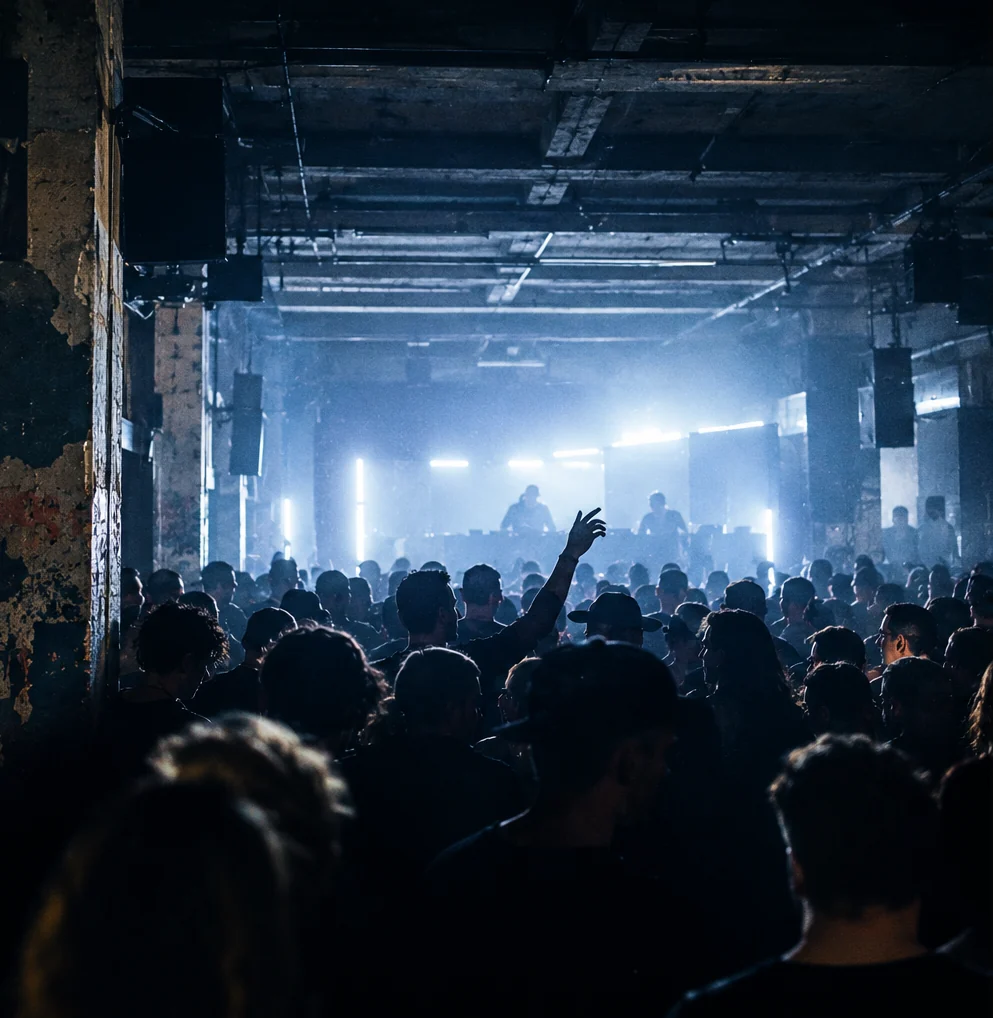
Most of the best rooms in this country were not built for this. They were built to store things, or to hold up a railway line, or to be the basement of a pub. We ended up in them because the proper venues closed, and then we found out they were better.
Why the wrong buildings turned out to be the right ones
A purpose built club is designed around sightlines and bar takings. A railway arch is designed around trains. One of those turns out to be better for dancing, and it is not the one you would guess.
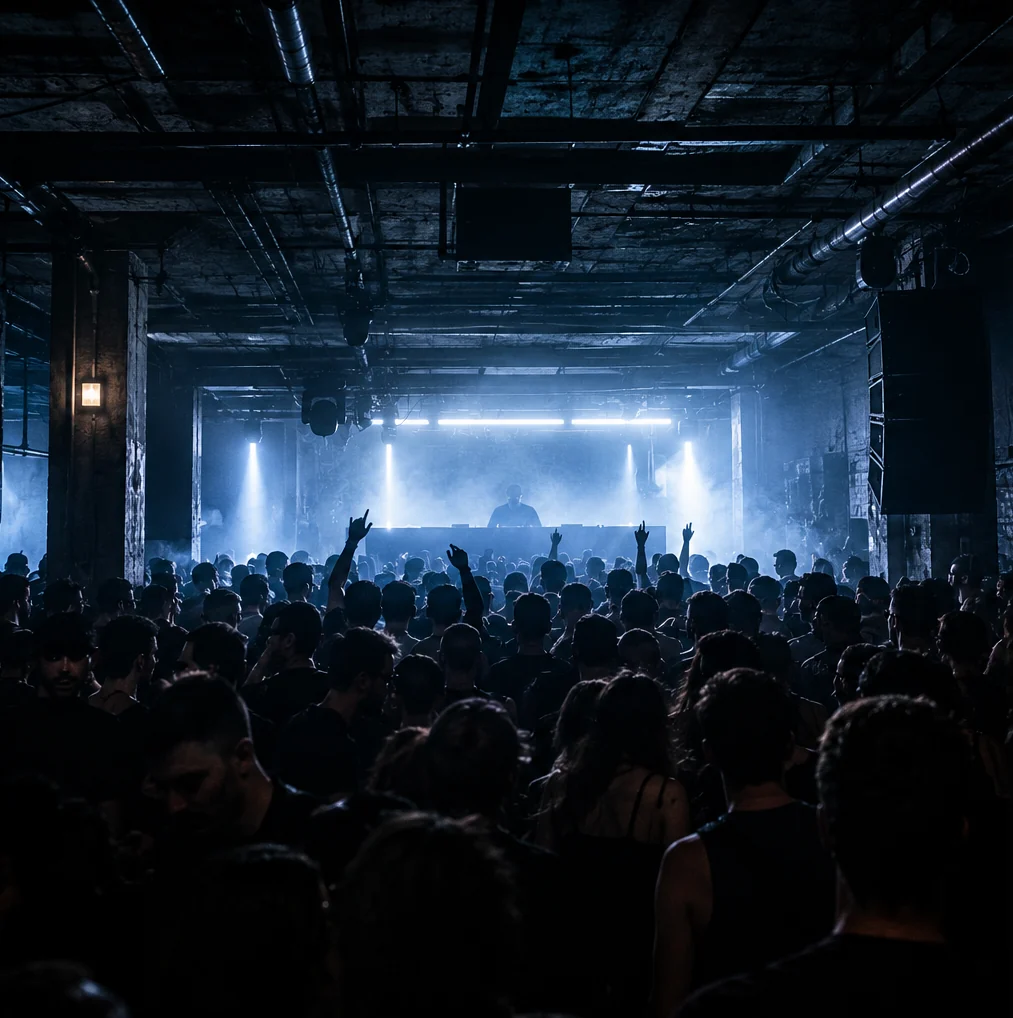
Arches are long and curved, so the sound comes back at you off brick instead of dying in carpet. Warehouses have height, which is the thing that lets a room hold a thousand people without feeling like a crush. Basements are small and low and hot, and that is the point: in a low room you are never far from the speakers and you are never far from anybody else.
None of that is an accident of taste. It is physics, and it is why the same crowd that will not fill a function room will fill an arch twice over.
How to read a room before you go
You can tell a lot from a listing if you know what you are looking at.
Capacity against the lineup. A big booking in a small room is the best night you will have all year. A small booking in a big room is a quiet one, and no amount of production fixes it.
Where the sound is from. If a promoter has gone to the trouble of naming the rig, they care. People who hire sound they are proud of do not then skimp on everything else.
The ceiling. Photos tell you this instantly. Low and close is intense. High and open is comfortable. Neither is wrong, but they are completely different evenings and you should know which one you are buying.
Where you can stand still. Every good room has somewhere off the floor to stop for five minutes without queueing. Rooms that have not thought about that are rooms that have not thought about you.
The trade, honestly
These spaces are not perfect and it is daft to pretend otherwise. The toilets are usually bad. Phone signal is usually worse. They are harder to get a licence for, harder to insure and harder to keep, which is why a venue you loved can be gone by the spring with no warning.
That is the deal. You are getting a room that was never meant to do this, run by people doing it on thin margins, and in exchange it sounds and feels like nothing a chain venue will ever manage.
So go to the small ones
If there is one thing worth taking from this: the night you will remember this year is more likely to be in a two hundred capacity room you have never heard of than in the big one with the poster everywhere.
Those nights are listed. They are just listed quietly, by people who spent their money on the sound rather than the advertising.
Have a look at what is on tonight, or what is coming up this weekend, and pick one in a room you have never been in. Worst case it is a bad night and you have learned something. Best case you have found your place.